My ten-year-old daughter always rushed to the bathroom as soon as she came home from school. As I asked, “Why do you always take a bath right away?” she smiled and said, “l just like to be clean.” Yet, one day while cleaning the drain, I found something. The moment I saw it, my whole body started trembling, and I immediately…………
My daughter Sophie is ten, and for months she followed the same pattern every single day: the moment she walked in from school, she dropped her backpack by the door and hurried straight to the bathroom.
At first, I brushed it off as a phase. Kids get sweaty. Maybe she didn’t like feeling grimy after recess. But it happened so often that it started to feel… rehearsed. No snack. No TV. Sometimes not even a greeting-just “Bathroom!” followed by the sound of the lock turning.
One night, I finally asked her softly, “Why do you always take a bath right away?”
Sophie flashed a smile that was just a little too practiced and said, “I just like to be clean.”
That answer should have eased my mind. Instead, it left a tight knot in my stomach. Sophie was usually messy, blunt, forgetful. “I just like to be clean” sounded like something she’d been coached to say.
About a week later, that knot turned into something much heavier.
The bathtub had started draining slowly, leaving a gray ring at the bottom, so I decided to clean out the drain. I pulled on gloves, unscrewed the cover, and slid a plastic drain snake inside.
It snagged on something soft.
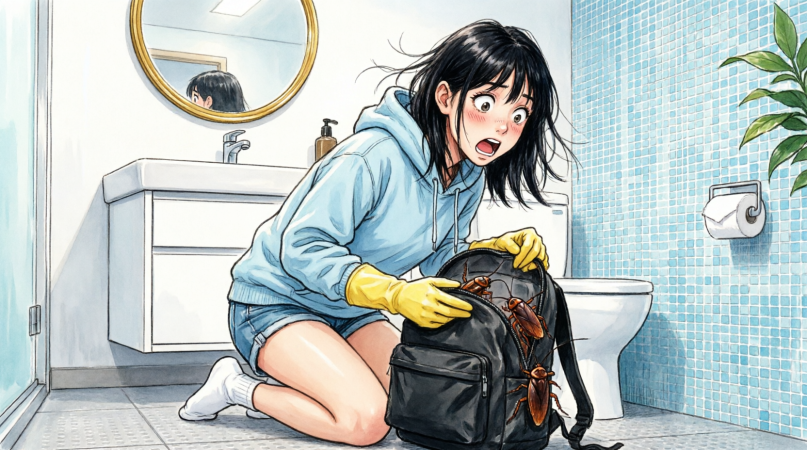
I tugged, expecting clumps of hair.
Instead, I pulled up a wet mass of dark strands tangled with something else -thin, stringy fibers that didn’t look like hair at all. As more came free, my stomach dropped.
There, mixed with the hair, was a small piece of fabric, folded and stuck together with soap residue.
It wasn’t random lint.
It was a torn piece of clothing.
I rinsed it under the faucet, and as the grime washed away, the pattern became clear: pale blue plaid-the exact fabric of Sophie’s school uniform skirt.
My hands went numb. Uniform fabric doesn’t end up in a drain from normal bathing. It ends up there when someone is scrubbing, tearing, trying desperately to remove something.
I flipped the fabric over and saw what made my entire body start shaking.
A brownish stain clung to the fibers —faded now, diluted by water, but unmistakable.
It wasn’t dirt.
It looked like dried blood.
My heart slammed so loudly I could hear it. I didn’t realize I was stepping backward until my heel hit the cabinet.
Sophie was still at school. The house was silent.
My mind raced for innocent explanations -nosebleed, scraped knee, a ripped hem -but the way Sophie rushed to bathe every single day suddenly felt like a warning I had ignored.
My hands shook as I grabbed my phone.
The moment I saw that fabric, I didn’t “wait to ask her later.”
I did the only thing that made sense.
I called the school.
When the secretary answered, I forced my voice to stay steady as I asked, “Has Sophie been having any accidents? Any injuries? Anything happening after school?”
There was a pause-too long.
Then she said quietly, “Mrs. Hart… can you come in right now?”
My throat tightened. “Why?”
Her next words made my blood go cold.
“Because you’re not the first parent to call about a child bathing the moment they get home.”
I drove to the school with the torn fabric sealed in a sandwich bag on the passenger seat, like evidence from a crime I didn’t want to name. My hands wouldn’t stop shaking on the steering wheel. Every red light felt unbearable.
At the front office, there was no small talk. The secretary led me straight to the principal’s office, where Principal Dana Morris and the school counselor, Ms. Chloe Reyes, were waiting. Both looked exhausted-the kind of tired that comes from holding secrets that weigh too much.
Principal Morris glanced at the bag in my hand. “You found something in the drain,” she said gently.
I swallowed. “This came from Sophie’s uniform. And there’s… there’s a stain.”
Ms. Reyes nodded, as if she had been expecting exactly that. “Mrs. Hart,” she said carefully, “we’ve had reports that several students are being encouraged to ‘wash up immediately’ after school. Some were told it was part of a ‘cleanliness program.”
My chest tightened. “Encouraged by who?”
Principal Morris hesitated, then said, “A staff member. Not a teacher. Someone assigned to the after-school pickup area.”
My stomach twisted. “You mean an adult has been telling kids to bathe?”
Ms. Reyes leaned forward, her voice calm and gentle. “We need to ask something difficult. Has Sophie mentioned a ‘health check’? Being told her clothes were dirty, being given wipes, or being asked not to tell parents?”
My mind jumped to Sophie’s rehearsed smile. “I just like to be clean.”
“No,” I whispered. “She hasn’t said anything. She barely talks lately.”
Principal Morris slid a folder across the desk. Inside were anonymized notes -stories that were horrifyingly similar. Children describing a man with a staff badge telling them they had “stains” or “smelled,” guiding them to a side bathroom near the gym, handing them paper towels, sometimes tugging at their clothes “to check.” He warned them, ‘If your parents find out, you’ll get in trouble.”
I felt sick. “That’s grooming.” I said, my voice shaking.
Ms. Reyes nodded. “We believe so.”
I forced myself to breathe. “Why wasn’t this stopped sooner?”
Principal Morris’s eyes filled. “We suspended him yesterday while investigating. But we didn’t have
physical evidence. The kids were scared. Some parents assumed it was about hygiene. We needed something concrete.”
I looked down at the fabric again, my throat burning. “So Sophie was trying to wash it away.”
Ms. Reyes spoke softly. “Children often bathe immediately after something invasive because they feel contaminated. It’s not about being dirty. It’s about trying to regain control.”
Tears spilled before I could stop them. “What do you need from me?”
Principal Morris replied, “We want to speak with Sophie today, with you present, somewhere safe. Law enforcement has already been contacted.”
My hands clenched. “Where is she right now?”
“In class,” Ms. Reyes said. “We’ll bring her here. But please-don’t interrogate her. Let her speak in her own time. Safety comes first.”
When Sophie entered the office, she looked so small in her uniform, her hair still slightly damp from her morning shower. She saw me and immediately looked down, as if she already understood.
|I took her hand. “Sweetheart,” I whispered, “you’re not in trouble. I just need you to tell me the truth.”
Her lip trembled. She nodded once.
Then she whispered the sentence that silenced the room:
“He said if I didn’t wash, you would smell it on me.”
My heart shattered and hardened all at once.
“Sophie,” I said gently, “who said that?”She squeezed my fingers painfully tight. “Mr. Keaton,” she whispered. “The man by the side door.” Ms. Reyes kept her voice calm. “What did he mean by ‘smell it’?”Sophie’s eyes filled with tears. “He… he touched my skirt,” she said. “He said there was a stain. He took me to the bathroom by the gym. He came in after. He said it was a ‘check.” Her voice cracked. “He told me I was dirty.”
I pulled her into my arms, shaking. “You are not dirty,” I said fiercely. “You did nothing wrong.”
Detective Marina Shaw arrived within the hour. She didn’t rush Sophie or push for details -just confirmed the basics and explained, in simple terms, that adults are never allowed to do what Mr. Keaton did. Sophie listened carefully, like she was deciding whether the world was safe again.
The detective took the bag with the torn fabric as evidence. Sophie’s uniform from that day was collected, photographed, and security footage from the side entrance and gym corridor was requested. The principal explained that Mr. Keaton had no legitimate reason to be near student bathrooms and that his access had already been revoked.
That night, even after spending the entire day with me, Sophie still tried to head straight for the bath when we got home.
I knelt and held her shoulders. “You don’t have to wash to be okay,” I told her. “You’re already okay. And I’m here.”
She looked up with red, tired eyes. “Will he come back?”
“No,” I said-and this time, I meant it. “He can’t.”
The case moved quickly after that. One parent came forward. Then another. The pattern became undeniable: the “cleanliness” excuse, the threats, the isolation. Mr. Keaton was arrested for inappropriate contact and coercion. The school introduced new supervision rules, bathroom escort policies, and mandatory reporting training-measures that should have existed before, but at least existed now.
Sophie began therapy. Some days were easier. Some were raw. She drew pictures of herself standing behind a locked door with a huge lock labeled “MOM.” I keep that drawing on my nightstand as a reminder of what my job truly is.
And I’ll be honest-I still think about that drain. About how close I came to ignoring a pattern because it was easier to accept “I just like to be clean.” Sometimes danger doesn’t arrive loudly. Sometimes it repeats quietly.
So if you’re reading this, I want to ask you gently: what small change in a child’s behavior would make you pause and look closer — without panic, but without brushing it off either?
Share your thoughts. Conversations like this help adults notice patterns sooner-and sometimes, noticing is what keeps a child safe………….
Months passed, but the weight of that day never fully lifted -it simply changed shape.
Sophie turned eleven in a quiet backyard party with just family and her two closest friends. No big crowds no unfamiliar adults. She blew out the candles on a simple chocolate cake and, for the first time in a long while, her smile reached her eyes. When I hugged her afterward, she whispered, “I didn’t wash today, Mom. And I’m okay.” I held her tighter than I probably should have, swallowing the lump in my throat.
Mr. Keaton —his real name now public in the court documents-pleaded guilty to multiple counts of child endangerment and sexual abuse of a minor. More families came forward once the first charges were filed.
The evidence from Sophie’s uniform, the security footage showing him leading her toward the side bathroom, and the testimonies of other children painted a clear, damning picture. He received a lengthy prison sentence. The school district settled quietly with the affected families, implemented stricter protocols, and the after-school area now has two staff members on duty at all times with visible cameras.
But justice, even when it arrives, doesn’t erase the scar.
Sophie still has hard days. Some nights she wakes up convinced she smells “dirty” again, even after a normal day of school and play. On those nights we sit together in the bathroom while she takes a shower-not because she has to, but because she chooses to. I wait outside the door, humming the silly songs we used to sing when she was little. She knows now that the door doesn’t have to be locked. She knows I’m there.
Therapy helped her find words for the shame he tried to plant inside her. She learned that his words were weapons, not truths. One session, she drew a new picture: herself standing in an open field, no locked doors, with me beside her holding a big key. She titled it “Free.” I framed that one too.
I changed as well. The knot in my stomach never fully disappeared, but it became something useful – sharper instincts, quicker questions, less willingness to accept easy answers. I started volunteering with a local child safety organization, speaking to parent groups about noticing the quiet changes: the sudden obsession with cleanliness, the rehearsed phrases, the emotional distance. I always end with the same line:
“Trust your unease. A child’s silence can be louder than you think.”
Sophie is healing. She laughs more freely now. She leaves her backpack by the door and sometimes even forgets to head straight for the bath. She tracks mud into the house again like a normal kid. And when she does rush to clean up after soccer practice, I no longer feel that old dread. I just call out, “Don’t use all the hot water, messy gir!!”
One evening, as we were folding laundry together, she paused over her school uniform skirt-the new one, without any torn pieces or hidden stains.
“Mom?” she asked softly.
“Yeah, baby?”
“I’m really glad you cleaned the drain that day.”
I set the shirt down and looked at her. “Me too.”
She nodded once, satisfied, and went back to folding. In that small moment, I saw it: the beginning of trust returning, the slow rebuilding of safety in her own skin.
The house still has that gray ring sometimes in the tub. I leave it now and then as a reminder. Not of fear, but of vigilance. Of how love sometimes means digging through the mess instead of pretending it isn’t there.
And if you’re a parent reading this -keep noticing. Keep asking the gentle questions. Keep being the adult who refuses to look away.
Because sometimes, the thing that saves a child is as simple, and as hard, as cleaning out a drain.
PART 1 — The First Night Sophie Slept With the Lights On
Because sometimes, the thing that saves a child is as simple, and as hard, as cleaning out a drain.
But surviving something terrible?
That was harder.
Three weeks after Mr. Keaton’s arrest, our house looked normal again from the outside.
The dishes still piled beside the sink.
The dog still barked at squirrels through the front window.
Every morning, Sophie still tied her shoelaces crooked and forgot where she left her backpack.
But fear had moved into the quiet spaces of our lives.
And once fear settles into a home, it doesn’t leave all at once.
It lingers.
Sometimes in silence.
Sometimes in the way a child suddenly checks a lock twice before bed.
Sometimes in the way a mother wakes up at every sound in the hallway.
The first thing I noticed was the lights.
Sophie stopped turning them off.
Not intentionally.
She just… couldn’t.
The bathroom light stayed glowing under the door after she brushed her teeth.
Her bedroom lamp stayed on until midnight.
Even the hallway light outside her room burned all night long.
The electric bill climbed, but I never mentioned it.
Because I understood.
Darkness had become something different to her now.
One Thursday night, I tucked her into bed and kissed her forehead softly.
“You okay, baby?”
She nodded too quickly.
“I’m fine.”
That word again.
Fine.
Children use that word when they don’t have language big enough for what they actually feel.
I smoothed her blanket gently.
“You know you can always tell me if something’s wrong.”
She looked at the wall instead of me.
“I know.”
But her voice sounded small.
Fragile.
Like someone trying very hard not to break apart in front of another person.
I stayed beside her a little longer than usual.
When I finally stood to leave, Sophie’s fingers wrapped suddenly around my wrist.
“Mom?”
I turned back immediately.
“Yeah?”
Her eyes flicked toward the dark hallway behind me.
“Can you leave the door open tonight?”
The question shattered something inside me.
Not because it was dramatic.
Because it was polite.
Careful.
Like she was afraid she was asking for too much.
“Of course,” I whispered.
I left the door open wide.
The hallway light stretched softly across her carpet.
Sophie finally relaxed against the pillow.
But I noticed something else before I walked away.
She wasn’t watching me anymore.
She was watching the doorway.
Making sure she could still see outside.
Making sure nobody was standing there.
That night, I barely slept.
Every sound pulled me awake.
The refrigerator humming.
Pipes shifting.
Branches scratching softly against the window.
At 2:13 a.m., I heard footsteps.
Small ones.
Then a whisper.
“Mom?”
I sat up instantly.
Sophie stood in the hallway clutching her blanket tightly against her chest.
Her face looked pale under the dim light.
“I had the dream again,” she whispered.
I pulled back the blanket immediately.
“Come here.”
She climbed into bed beside me without another word.
The moment she settled against my shoulder, I felt it.
She was trembling.
Not violently.
Not dramatically.
Just tiny shakes moving through her body like fear still hadn’t realized it was over.
I wrapped my arms around her carefully.
“You’re safe,” I whispered into her hair.
For a while, neither of us spoke.
Then Sophie’s voice cracked softly in the dark.
“He was there again.”
My throat tightened painfully.
“The dream?”
She nodded against my shoulder.
“What happened?”
Sophie swallowed hard.
“He kept saying I was dirty.”
I closed my eyes.
Even after arrest.
Even after police.
Even after therapy had started.
That man’s voice was still living inside my daughter’s head.
And that was the part nobody prepares you for.
The danger doesn’t always end when the person disappears.
Sometimes it stays behind inside the child.
Sophie’s fingers twisted tightly into my pajama sleeve.
“Mom?”
“Yes, baby?”
“What if he comes back someday?”
The question hit me so hard I couldn’t breathe for a second.
Because children believe parents can promise absolute safety.
They think we can build walls tall enough to keep evil outside forever.
And the truth is…
sometimes we’re just human beings standing in doorways trying our best to block the dark.
I stroked her hair slowly.
“He can’t hurt you anymore.”
“But how do you know?”
Tears burned behind my eyes.
Because I didn’t know.
Not completely.
No parent ever really does.
But I knew one thing with absolute certainty.
“No matter what happens,” I whispered, “you will never face it alone again.”
Sophie finally stopped shaking sometime near dawn.
She fell asleep curled beside me, one small hand still gripping my sleeve even in her dreams.
And I stayed awake watching the hallway light spill across the room…
understanding for the first time that healing doesn’t begin when danger ends.
Healing begins the moment a child realizes someone will stay beside them through the fear.
PART 3 — The First Time She Refused School
The first real setback happened on a Monday.
Of course it did.
Bad mornings always seem to choose Mondays.
I woke up early to make Sophie’s lunch—turkey sandwich, apple slices, the tiny chocolate cookies she liked pretending she was “too old” for but still ate first every single day.
By 7:10 a.m., the kitchen smelled like toast and coffee.
By 7:12, I knew something was wrong.
Sophie was dressed for school.
Shoes on.
Backpack zipped.
But she stood frozen near the front door staring at the floor like she’d forgotten how to move.
“Sophie?” I said gently.
No answer.
I walked closer.
“Baby?”
Her breathing sounded strange.
Too fast.
Too shallow.
The moment I touched her shoulder, she flinched hard enough to make my stomach drop.
Then came the words.
“I can’t go.”
Quiet.
Terrified.
Final.
I crouched beside her immediately.
“What happened?”
Tears filled her eyes so quickly it looked painful.
“I can’t go back there.”
My chest tightened.
“To school?”
She nodded.
“I tried,” she whispered. “I really tried.”
And suddenly I understood.
This wasn’t rebellion.
This wasn’t a child faking sick.
This was fear hitting her body faster than her mind could control it.
A panic attack.
At ten years old.
I slowly guided her to the couch while she struggled to breathe evenly.
“You’re okay,” I whispered softly. “Just breathe with me.”
She buried her face against my shoulder.
“I don’t want people looking at me.”
That sentence hurt more than I expected.
Because shame changes children.
It teaches them visibility is dangerous.
I stroked her hair carefully.
“Did someone say something?”
She hesitated too long.
Then nodded.
My stomach turned cold.
It happened the previous Friday.
A boy in her class had asked why she kept leaving school early for counseling sessions.
Another girl whispered:
“That’s the girl from the news.”
Not cruel exactly.
But curious.
Children often don’t understand the weight of what they repeat.
Sophie looked down at her hands while explaining.
“They weren’t mean,” she whispered quickly.
That broke me even more.
Because children who experience trauma often defend other people before themselves.
I lifted her chin gently.
“You don’t have to protect everyone else’s intentions, baby.”
Tears slipped down her cheeks.
“I just want things to go back to normal.”
There it was.
The impossible wish every hurting child carries.
Normal.
As if trauma is a door life eventually walks backward through.
I held her tightly.
“I know.”
And I did know.
Because secretly, I wanted that too.
By 8:00 a.m., I’d already called the school.
Principal Morris answered personally this time.
The exhaustion in her voice had deepened over the past month.
“I’m so sorry,” she said after I explained.
“She’s having a panic response,” Dr. Carter later confirmed over the phone.
“That doesn’t mean she’s regressing. It means her body finally feels safe enough to react.”
I sat at the kitchen table gripping my coffee mug tightly.
“That sounds backwards.”
“It feels backwards,” the therapist agreed gently. “But many children stay emotionally numb during survival. The feelings often come later.”
After survival.
After safety.
After the body stops running.
That truth haunted me all day.
Around noon, I found Sophie sitting cross-legged on her bedroom floor surrounded by crayons and paper.
She didn’t notice me immediately.
She was drawing carefully.
Slowly.
I glanced down at the page.
A school hallway.
Long.
Empty.
Every classroom door closed.
And at the far end…
a tiny little girl standing alone.
My throat tightened painfully.
“Sophie?”
She looked up quickly.
Like she’d been caught doing something wrong.
I sat beside her quietly.
“That’s beautiful.”
“It’s not supposed to be.”
I studied the drawing again.
“It feels lonely.”
She nodded once.
“That’s what school feels like now.”
The honesty in her voice nearly crushed me.
I wrapped an arm around her shoulders gently.
“You know none of this was your fault, right?”
Sophie stared at the drawing for a long moment.
Then asked something so quietly I almost missed it.
“But what if people always think about it when they see me?”
I didn’t answer immediately.
Because I knew what she was really asking.
Will I ever just be Sophie again?
Not the girl from the news.
Not the girl from counseling.
Not the girl something bad happened to.
Just Sophie.
I swallowed hard.
Then answered honestly.
“The right people will see all of you.”
She leaned against me silently after that.
And for a while, we just sat there on the bedroom floor together beside a drawing of an empty hallway neither of us quite knew how to walk through yet.
That evening, Sophie finally asked the question I think she’d been carrying for weeks.
“Mom?”
“Yeah?”
“If I go back tomorrow… will you stay until the bell rings?”
I smiled immediately.
“Baby, I’ll stay as long as you need.”
She nodded slowly.
Then whispered:
“Okay.”
Not healed.
Not fixed.
But trying.
And sometimes trying is the bravest thing a child can do…………………………
PART 4 — The Therapist’s Question
The next morning, I walked Sophie all the way to her classroom.
Not just to the school doors.
Not just to the hallway.
All the way to her desk.
Some parents stared politely and looked away.
Others gave me soft smiles filled with too much sympathy.
I hated those smiles.
Not because they were cruel.
Because they reminded me that everyone knew.
Sophie stayed close to my side while we walked through the hallway.
Close enough that her sleeve brushed against my arm every few steps.
Like she needed to make sure I was still there.
When we reached her classroom door, she stopped walking.
Her breathing changed again.
Small.
Quick.
Fear moving silently under the surface.
I crouched beside her immediately.
“You don’t have to be brave all at once,” I whispered.
Her eyes filled instantly.
“What if everyone’s staring?”
I glanced around the classroom.
A few kids looked up briefly.
Most didn’t.
Children move on faster than adults think.
But fear doesn’t care about logic.
Fear cares about possibility.
I touched her cheek gently.
“Then let them stare for one minute,” I said softly. “After that, they’ll go back to being kids.”
Sophie looked uncertain.
But she nodded.
One tiny nod.
Then she stepped inside.
And even though her hands trembled…
she walked to her seat.
I stayed until the bell rang exactly like I promised.
When I finally turned to leave, Sophie looked up at me one last time.
Not panicked.
Not calm.
Just checking.
Still making sure I hadn’t disappeared.
I smiled and pointed gently to my heart.
Our little signal since she was small.
I’m with you.
Always.
She touched her own chest in response.
And I walked out before I started crying in front of third graders.
That afternoon, we had another therapy session.
This time, Dr. Carter asked Sophie if she wanted to draw while we talked.
Sophie nodded.
She always talked easier when her hands stayed busy.
While Sophie colored quietly at the small table across the room, Dr. Carter turned toward me.
Then she asked the question that changed something inside me.
“When do you think Sophie stopped feeling safe in her own body?”
I stared at her.
My throat tightened instantly.
Because I had been asking myself:
When did this happen?
When did it start?
When should I have noticed?
But not that.
Not:
When did my child stop feeling safe inside herself?
I looked across the room at Sophie.
She was coloring carefully.
Too carefully.
Every movement controlled.
Measured.
Dr. Carter spoke gently.
“Children who experience grooming or inappropriate behavior often begin disconnecting from their own physical comfort.”
I swallowed hard.
“The baths.”
Dr. Carter nodded.
“Yes.”
“She wasn’t cleaning herself,” I whispered.
“No,” Dr. Carter said softly. “She was trying to remove a feeling.”
That sentence hollowed me out completely.
Because suddenly every rushed shower looked different.
Every locked bathroom door.
Every scrubbed arm.
Every rehearsed smile.
My daughter hadn’t been trying to become clean.
She had been trying to stop feeling contaminated.
Tears blurred my vision so quickly I had to look down.
“I should’ve known.”
Dr. Carter’s voice stayed calm.
“Parents say that almost every time.”
“But I’m her mother.”
“And you noticed.”
Her tone sharpened slightly—not angry, but firm.
“You noticed the pattern. You asked questions. You acted.”
I wiped my eyes quickly.
“But she still went through it.”
Dr. Carter paused.
Then said quietly:
“Yes.”
The honesty stunned me.
No false comfort.
No pretending perfect protection exists.
Just truth.
Painful truth.
Sometimes loving your child completely still doesn’t stop harm from reaching them.
That realization nearly broke me.
Across the room, Sophie suddenly spoke without looking up from her drawing.
“Mom?”
I quickly wiped my face again.
“Yeah, baby?”
She hesitated.
Then asked quietly:
“Am I weird now?”
The room went completely still.
Dr. Carter didn’t interrupt.
Didn’t redirect.
She let the question breathe.
I stood up immediately and crossed the room.
“No,” I said fiercely.
Sophie finally looked up at me.
Her eyes were frightened.
“But I’m different.”
I knelt beside her chair.
Different.
God.
What a heartbreaking word for a ten-year-old to carry.
I took her small hands carefully into mine.
“You went through something hard,” I whispered.
“That changes people sometimes.”
Her lip trembled.
“So I am different.”
I swallowed hard.
“Yes,” I admitted softly.
Her eyes filled instantly.
Before she could speak again, I continued:
“But different doesn’t mean broken.”
Silence.
Sophie stared at me carefully.
Like she was deciding whether to believe me.
I squeezed her hands gently.
“You are still funny.”
“Still smart.”
“Still stubborn.”
That made the tiniest smile flicker across her face.
I kept going.
“You still leave wet towels on the floor.”
Another tiny smile.
“And you still put ketchup on things that should honestly be illegal.”
Dr. Carter laughed softly from behind us.
Sophie finally let out a small sound too.
Not a full laugh.
But close.
Very close.
And somehow that tiny almost-laugh felt bigger than anything else that happened all week.
Later that night, after Sophie fell asleep, I sat alone at the kitchen table replaying Dr. Carter’s question over and over in my mind.
When did she stop feeling safe in her own body?
I thought about childhood.
How children are supposed to move through the world naturally.
Carelessly.
Without constantly monitoring themselves for danger.
And I realized something terrifying.
Mr. Keaton hadn’t just frightened Sophie.
He had interrupted her relationship with herself.
That was the real damage.
Not just fear.
Distrust.
Of her instincts.
Her comfort.
Her own skin.
I sat there crying quietly into my hands while the house slept around me.
Then eventually I stood up, walked down the hallway, and peeked into Sophie’s room.
She was asleep curled tightly under her blanket.
One hand resting near the nightlight glowing softly beside her bed.
I stood there for a long time watching her breathe.
And silently promised something I wished I could guarantee forever.
Nobody will ever make you feel unsafe inside yourself again
PART 5 — The Drawing With No Face
Two weeks later, Sophie drew herself without a face.
I didn’t notice it at first.
The picture sat among several others spread across Dr. Carter’s office floor—flowers, a soccer field, our dog wearing sunglasses for some reason.
Normal kid drawings.
Then my eyes landed on the last page.
A little girl standing alone beneath a bright yellow sun.
Carefully colored dress.
Brown ponytail.
Tiny sneakers.
But where her face should have been…
there was only blank paper.
My stomach tightened instantly.
Dr. Carter noticed my expression.
“Would you like to ask her about it?” she said gently.
Sophie sat cross-legged nearby organizing crayons by color.
Careful.
Methodical.
Another new habit.
I picked up the drawing slowly.
“Sweetheart?”
She looked over.
“Why doesn’t she have a face?”
Sophie glanced at the page.
Then shrugged too quickly.
“I forgot.”
But children almost never “forget” faces.
Especially their own.
Dr. Carter leaned back quietly, giving Sophie space instead of pressure.
Sophie kept sorting crayons.
Blue.
Green.
Yellow.
Avoiding my eyes.
Finally she whispered:
“I didn’t know what expression to give her.”
The room went silent.
My chest physically hurt.
Dr. Carter spoke carefully.
“That’s a very honest answer.”
Sophie’s fingers tightened around a crayon.
“Sometimes I feel normal.”
She swallowed hard.
“Sometimes I feel scared.”
Another crayon moved into a pile.
“Sometimes I feel dirty again.”
My heart cracked open all over again.
“And sometimes,” Sophie whispered, “I don’t feel like anything.”
That last sentence nearly destroyed me.
Because numbness in adults is painful.
But numbness in children feels unbearable.
A child should feel everything.
Joy.
Anger.
Embarrassment.
Excitement.
Not emptiness.
Never emptiness.
Dr. Carter moved her chair slightly closer.
“Sophie,” she asked softly, “do you know why some people stop recognizing their feelings after something traumatic happens?”
Sophie shook her head.
“Because feelings can become overwhelming,” Dr. Carter explained gently. “So sometimes the brain tries to protect us by turning the volume down.”
Sophie listened carefully.“Like muting a TV?”
Exactly.”
That seemed to make sense to her.
She looked back at the drawing.
“I don’t like it.”
“The drawing?” I asked quietly.
“No.” Sophie’s voice grew smaller. “Feeling weird.”
I moved beside her on the floor immediately.
“Oh, baby.”
She stared hard at the paper.
“I used to know what kind of person I was.”
The honesty of that sentence made tears rush into my eyes.
Ten years old.
And already grieving the version of herself she lost.
I wrapped an arm around her shoulders.
“You’re still you.”
“But different.”
I nodded slowly.
“Yes.”
This time I didn’t fight the word.
Different wasn’t failure.
Different was survival.
Dr. Carter smiled softly at me, like she understood why that mattered.
Sophie leaned against my side quietly.
Then asked something that made the entire room ache.
“Do you think I’ll ever feel normal again?”
Dr. Carter answered before I could.
“I think one day you’ll stop measuring yourself against who you were before.”
Sophie frowned slightly.
“What does that mean?”
The therapist folded her hands gently.
“It means healing isn’t becoming exactly the same person again.”
She smiled softly.
“It’s learning how to feel safe being the person you are now.”
Sophie thought about that for a long time.
Long enough that the room fell completely silent except for the soft hum of the air conditioner.
Finally she looked down at the faceless drawing again.
Then slowly picked up a brown crayon.
My breath caught.
Carefully…
very carefully…
she began drawing eyes.
Then a nose.
Then a tiny mouth.
“Not smiling.
Not frowning.
Just calm.
Present.
Real.
I don’t think Sophie understood why tears suddenly filled my eyes.
|But Dr. Carter did./
Because sometimes healing doesn’t arrive dramatically.
Sometimes it arrives in the form of a child deciding she deserves a face again.
That evening, Sophie helped me cook spaghetti for dinner.
Another small milestone.
Before everything happened, she used to dance around the kitchen singing nonsense songs while stirring sauce dramatically like she hosted her own cooking show.
That disappeared after Mr. Keaton.
Silence replaced it.
Carefulness replaced it.
But tonight, while sprinkling parmesan cheese onto her plate, she suddenly said:
“You put too much garlic in everything.”
I stared at her.
Offended.
“You say that like it’s a bad thing.”
A tiny grin appeared.
“There’s probably garlic in your shampoo.”
I gasped dramatically.
“Okay, rude.”
And then it happened.
Sophie laughed.
A real laugh.
Short.
Unexpected.
Beautiful.
The sound hit me so hard emotionally I had to turn toward the stove for a second so she wouldn’t see my face crumple.
Because for weeks every smile had looked fragile.
Every happy moment felt temporary.
But this laugh?
This one escaped naturally.
Without fear.
Without effort.
And for the first time in a very long time…
it sounded like my daughter.