Grace had been home for only three days when a sobbing forty-two-year-old woman appeared on my doorstep.
The first question she asked made me instinctively pull my newborn closer because somehow this stranger knew exactly when my daughter had been born.
I was thirty-three when I decided to freeze my eggs. At the time, the choice didn’t feel especially emotional or dramatic. It felt sensible. I had a career I loved, friends who kept my weekends full, and a small apartment that always felt temporary compared with the life I assumed I would eventually build.
I kept telling myself I had plenty of time.
Back then, I was certain motherhood was somewhere in my future. I could already imagine a tiny hand wrapped around my finger, birthday candles, school photographs, scraped knees, and a little voice calling “Mom” from another room.
I assumed I would meet the right man first. We would marry, and children would naturally follow.
Life was supposed to happen in that order.
The fertility specialist who froze my eggs warned me not to treat them like a guarantee. Medicine could preserve an opportunity, he explained, but it could never promise that opportunity would become a child.
I understood what he meant.
Or at least, I thought I did.
I signed the paperwork and left the clinic feeling relieved. In my mind, I had protected my future.
But “someday” never arrived the way I expected.
Years passed much faster than I imagined. There were relationships, including a few serious ones that made me wonder whether I had finally met the man I would build a family with.
None lasted.
One man wanted children but refused to consider marriage. Another wanted marriage but avoided every conversation about having children. One relationship lasted nearly five years before I finally realized that we had built an entire life around avoiding difficult questions.
Eventually, I stopped trying to force my future into the shape I had imagined when I was younger.
No husband.
No children.
For years, I felt ashamed of those two facts. At weddings, people asked when it would finally be my turn. At baby showers, younger women complained about sleepless nights while I smiled, folded tiny clothes, and congratulated them.
I truly was happy for them.
But being happy for someone else doesn’t erase the grief over what you never received.
By my late forties, people stopped asking whether I planned to have children.
Their silence somehow hurt even more.
It felt as though everyone had quietly decided that part of my life was over.
My frozen eggs remained at the clinic. Every year, another storage bill arrived, and every year I paid it because I couldn’t bring myself to let them go.
At first, those eggs represented possibility.
Later, they became a memory.
They belonged to the thirty-three-year-old version of me who had believed motherhood was merely delayed, not lost.
Still, I built a life. I traveled, worked, eventually retired, made wonderful friends, lost some of them, and cared for my parents before they died. I became the relative everyone called for advice because they assumed I had fewer responsibilities than everyone else.
Sometimes they were right.
Other times, they had no idea how quiet a house could become after dinner or how a holiday could feel joyful and lonely at exactly the same time.
Eventually, I stopped imagining myself as anyone’s mother.
Then, at seventy-five, I made a decision almost everyone around me called insane.
It wasn’t impulsive. The idea had been growing quietly for months.
One afternoon, while cleaning out a cabinet, I found an old folder containing documents from the fertility clinic. I sat on the floor reading them until my legs went numb.
Thirty-three.
That number appeared beside my name again and again.
I kept staring at it.
The woman I had been at thirty-three had trusted her future self to do something with the chance she had preserved.
The next morning, I called the clinic.
What followed was anything but simple. There were medical tests, consultations, legal meetings, and uncomfortable conversations about my age, health, finances, and what would happen to a child if I died while she was still young.
I refused to avoid those questions.
At seventy-five, pretending death was decades away would have been irresponsible.
I met with an attorney, revised my will, spoke with younger relatives about guardianship, and created plans for circumstances I desperately hoped would never happen.
Then I made my decision.
I would use my final frozen egg and work with a surrogate.
The process exhausted me. There were endless appointments, legal contracts, phone calls, and nights when I genuinely wondered whether everyone who called me crazy might have been right.
One longtime friend finally confronted me.
“Margaret, have you really thought about what you’re doing?”
“Every single day.”
“You’ll be in your nineties before she’s grown.”
“I know.”
That answer never satisfied anyone.
But there was something they couldn’t understand.
I had already spent more than forty years wondering what would have happened if I had tried.
I wasn’t willing to spend whatever years I had left wondering the same thing.
When the pregnancy was confirmed, I cried alone in my kitchen. Then I started laughing because crying somehow didn’t feel big enough.
I followed every update obsessively. Ultrasound photographs sat beside my bed. I bought baby clothes far too early and worried about everything imaginable.
When the surrogate told me the baby had begun kicking, I pressed the phone against my ear as though I might somehow hear her through it.
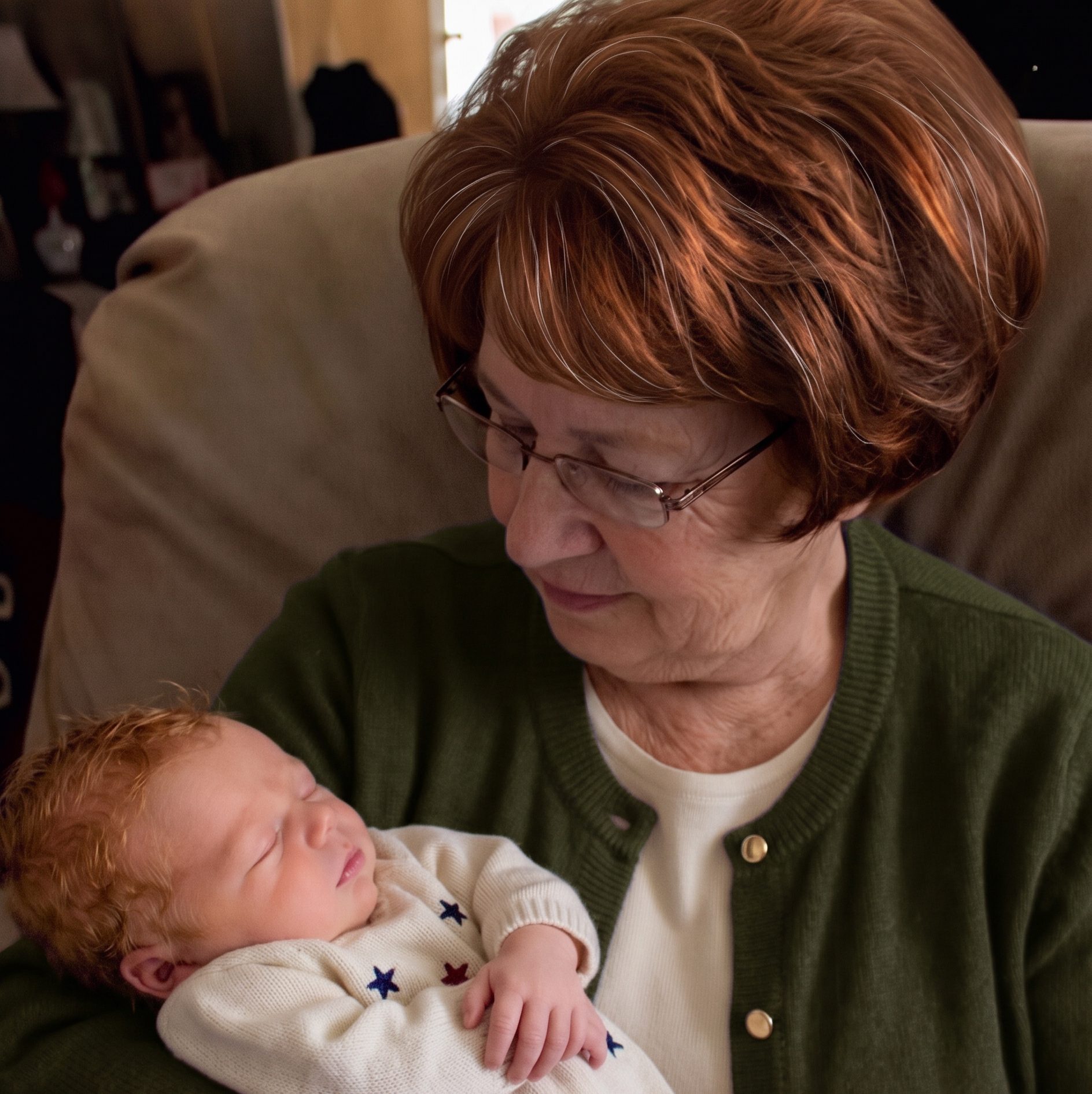
Nine months later, I held my daughter for the first time.
Her name was Grace.
She was perfect.
Her tiny fingers seemed impossibly delicate. Her face was red and scrunched, with dark hair covering her head. When the nurse placed her against my chest, everything else in the room disappeared.
I couldn’t stop crying.
Grace opened her eyes for only a moment.
It was enough.
Forty-two years after freezing those eggs, I had finally become someone’s mother.
Bringing her home frightened me more than I expected. I had prepared everything carefully—the crib, dresser, bottles, diapers, blankets—but none of that preparation stopped me from checking every few minutes to make sure she was still breathing.
The first night, I barely slept.
The second wasn’t much better.
I was exhausted, overwhelmed, terrified, and happier than I knew how to explain.
Then, three days after Grace came home, someone knocked on my front door.
I was standing in the living room with Grace against my chest when the knock came again.
I wasn’t expecting anyone.
I walked slowly toward the door and looked through the peephole.
A woman stood outside.
She looked to be around forty, and her eyes were swollen from crying. Something about her posture immediately made me uneasy.
Grace stirred against me.
I opened the door only halfway.
The woman looked directly at me.
“Are you Margaret?”
“Yes.”
Her eyes immediately dropped toward the baby.
“Was she born three days ago?”
My entire body tightened.
“Who are you?”
She swallowed hard.
“The clinic called me yesterday after your daughter was born.”
I instinctively pulled Grace closer.
“Why would the clinic call you?”
Instead of answering, the woman reached inside her coat.
I immediately shifted Grace higher against my chest.
She noticed.
“I’m not going to hurt you.”
Then she pulled out a folded envelope.
“My name is Ivanna. I’m forty-two.”
I remained where I was.
She held the envelope toward me.
“This came from the clinic.”
“What does it say?”
Her mouth trembled.
“I think you should read it yourself.”
Every instinct told me to close the door, lock it, and protect my daughter first.
Then I noticed Ivanna’s hands.
They were trembling.
Whatever was happening, she was frightened too.
“Come inside.”
She entered carefully, unable to stop looking at Grace.
I noticed.
“Please don’t stare at her like that.”
“I’m sorry.”
She quickly looked away.
I sat on the sofa with Grace pressed against me while Ivanna remained standing.
“Sit.”
She lowered herself into the chair opposite me.
I opened the envelope.
The first page was filled with formal medical and legal language. I read the opening paragraph twice before reaching a sentence that made the entire room seem to disappear around me.
The fertility clinic had discovered a possible mistake involving stored reproductive material.
My hands became cold.
“What mistake?”
Ivanna wiped her eyes.
“Keep reading.”
Years earlier, she had also frozen eggs at the same clinic. Her samples had been stored in the same facility as mine.
During an internal investigation triggered after Grace’s birth, technicians discovered that identification numbers on two storage records did not match archived laboratory information.
One record belonged to me.
The other belonged to Ivanna.
I looked up.
“No.”
She remained silent.
“No. They used my egg.”
“That’s what everyone believed.”
“I was told it was mine.”
“So was I.”
Grace made a tiny sound against my chest, and I immediately looked down at her peaceful face.
My heart began pounding.
“What exactly are you telling me?”
Ivanna took a slow breath.
“The clinic believes the egg used to create Grace might have been mine.”
For several seconds, I couldn’t process the sentence.
Every individual word made sense.
Together, they seemed impossible.
“Might have been?”
“They don’t know yet.”
“Then why are you standing in my house?”
Her expression tightened.
“Because they called me yesterday.”
“And you decided to come here?”
“I shouldn’t have.”
“You’re right.”
“I know.”
Tears filled her eyes again.
“But after they told me a baby had been born, I couldn’t think clearly.”
I stood abruptly.
Grace stirred.
Ivanna rose too.
“Sit down.”
She immediately obeyed.
I walked toward the window because suddenly my legs didn’t feel strong enough to support me.
For nine months, I had believed Grace had begun with the final remaining piece of my younger self. I imagined the woman I had been at thirty-three reaching across forty-two years and finally giving me the child she had preserved the possibility of having.
Now a stranger was sitting in my living room telling me that might not be true.
“Did you know the clinic still had one of your eggs?”
Ivanna nodded.
“I knew one remained.”
“Why didn’t you use it?”
Her face changed.
Immediately, I realized I had touched something painful.
“I tried.”
I turned toward her.
“My husband and I tried for years. We created several embryos. None survived.”
Her voice became softer.
“Then my husband died.”
I said nothing.
“Car accident. Two years ago.”
“I’m sorry.”
“After that, I couldn’t bring myself to return to the clinic.”
She looked toward the floor.
“I kept paying storage fees because destroying that final egg felt like closing a door I wasn’t ready to close.”
That sentence hit me harder than I expected.
I understood exactly what she meant.
“Yesterday, the clinic called and told me there might have been a mix-up. They said DNA testing would be necessary.”
“And they gave you my address?”
“No.”
I frowned.
“Then how did you find me?”
“They accidentally mentioned your full name during the call.”
She looked ashamed.
“I searched public records. I know I shouldn’t have.”
“You absolutely shouldn’t have.”
“I know.”
Her voice cracked.
“I didn’t come here to take your daughter.”
I stared at her.
“I didn’t say you did.”
“You were thinking it.”
She was right.
“I only needed to know if there really was a baby.”
She swallowed hard.
“Then you opened the door holding her.”
I looked down at Grace. One tiny fist rested against my shirt.
Something fiercely protective rose inside me.
“If the DNA test proves she’s biologically yours, what happens?”
Ivanna went pale.
“I don’t know.”
“Would you want custody?”
She didn’t answer immediately.
That hesitation terrified me more than any immediate answer could have.
“I asked you a question.”
“I know.”
She finally looked directly into my eyes.
“I’ve wanted a child for most of my adult life.”
My throat tightened.
“So have I.”
“I know.”
“No, you don’t.”
Her expression collapsed.
“You’re right. I don’t know your life.”
I sat down again.
For a while, neither of us spoke.
Two women.
Two frozen eggs.
Two lives shaped by decades of waiting.
And one sleeping newborn between us.
“I’ve had three days with her,” I whispered.
Ivanna looked at Grace.
“I’ve had none.”
That hurt.
I hated that it hurt.
I desperately wanted Ivanna to become the villain. I wanted her to say something selfish or cruel so I could hate her without guilt.
Instead, she looked completely broken.
Grace suddenly began fussing.
I stood and gently rocked her.
“It’s okay, sweetheart.”
Ivanna turned her face away, but I saw tears running down her cheeks.
Before I could think better of it, I asked,
“Do you want to hold her?”
Both of us looked surprised.
Ivanna stared at me.
“Are you sure?”
“No.”
For a second, she almost smiled.
So did I.
I walked toward her slowly.
She held out her arms.
Carefully, I placed Grace against her chest.
Ivanna’s entire body went rigid.
Then Grace relaxed.
Ivanna made a small sound and covered her mouth.
“She’s so tiny.”
“Seven pounds, two ounces.”
She smiled through her tears.
“Hello, Grace.”
I watched them together.
Jealousy came first.
Then fear.
But after those emotions came something I didn’t expect.
Compassion.
And somehow, that was the hardest emotion of all.
The DNA test was performed the following morning, and the clinic rushed the results.
Ivanna waited with me at my house.
We barely spoke.
Grace slept quietly in her bassinet while the two of us waited for a phone to ring and possibly change all three of our lives.
When the call finally came, I put it on speaker.
The doctor sounded exhausted.
“Margaret, Ivanna, we have the results.”
Without realizing it, I reached for Ivanna’s hand.
He continued.
“Grace is genetically related to Margaret.”
I closed my eyes.
For what felt like the first time in twenty-four hours, I could breathe.
Ivanna squeezed my hand.
Then the doctor continued.
“But there is something else both of you need to know.”
I opened my eyes.
“The laboratory investigation shows that Ivanna’s final stored egg was mistakenly discarded during the same incident.”
Ivanna went completely still.
The doctor began apologizing. He talked about investigations, liability, compensation, and legal options.
I barely heard any of it.
Suddenly, I understood.
Ivanna hadn’t come to my house to take Grace away.
She had come because the clinic had accidentally given her hope.
And now, less than two days later, it had taken that hope away again.
When the call ended, Ivanna slowly stood.
“I should go.”
I looked toward Grace.
Then back at her.
“Come back tomorrow.”
She stared at me.
“Why?”
“Because Grace is going to need people who love her.”
Ivanna began crying.
So did I.
She came back the following day.
Then again the next week.
Months later, Grace recognized her voice.
Years later, Grace would learn the entire strange story of how Ivanna entered our lives.
Ivanna never became Grace’s mother.
That was my role.
But she became something neither of us had expected.
Family.
At seventy-five, I thought finally becoming a mother would be the last great surprise of my life.
I was wrong.
Grace gave me something I had waited forty-two years to find.
Ivanna gave me something I had stopped expecting altogether—a new kind of family and a future that looked nothing like the one I had imagined when I was thirty-three.
It was stranger.
Messier.
Far less predictable.
And somehow, fuller than anything I could have planned.
For once, I was grateful that life had completely ignored my plans.