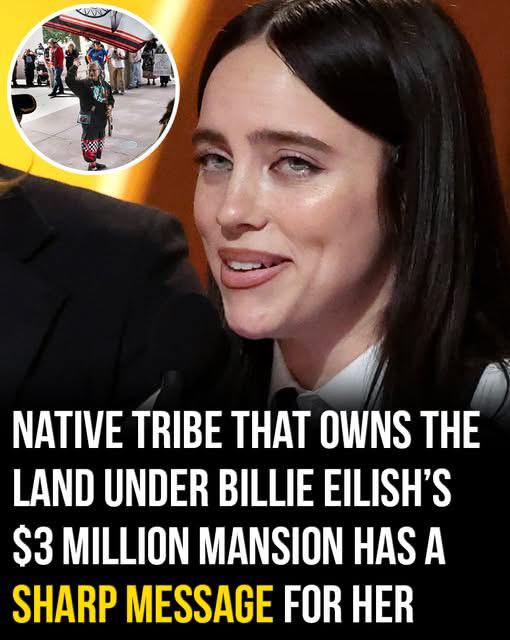
When Billie Eilish stepped onto the Grammy Awards stage and declared, “No one is illegal on stolen land,” she likely expected applause—and she received it. What followed, however, was a far more complicated national conversation that reached well beyond the music industry and into the lived realities of Indigenous peoples whose land her words invoked.
Within days, the Tongva Tribe, the Native American people whose ancestral territory includes much of modern-day Los Angeles, issued a response—measured, precise, and notably absent of outrage. Their statement did not demand restitution or spectacle. Instead, it sought clarity, recognition, and a deeper public understanding of what land acknowledgment truly means.
The moment that ignited the debate
Eilish, 24, accepted the Grammy for Song of the Year for Wildflower on February 1, standing alongside her brother and longtime collaborator Finneas. In her acceptance speech, she used her platform to criticize U.S. immigration enforcement and express solidarity with undocumented immigrants.
“As grateful as I feel, I honestly don’t feel like I need to say anything but that no one is illegal on stolen land,” she said, before adding an explicit condemnation of ICE.